
A Child’s Plea
I learned about a snail,
I learned about a worm,
I learned about flags and maps
And how to take my turn, I helped a friend when he was stuck,
I learned that water runs off a duck,
I looked at words from left to right,
Agreed to differ, not to fight,
Today I sang the continent song,
And learned the difference between right and wrong,
So mom and dad, please don’t say –
“DID YOU ONLY PLAY TODAY”
Yes, I played the whole day through,
I played to learn the things I do,
Encounter a problem, find the clue and work it out for myself, I do
My teacher set the scene, and stay nearby,
They help me to succeed and teach me how to try,
They are there to pose the problems, and to help me think,
They help to keep me afloat and never let me sink,
All of this is in my head and not on paper, you see,
So please don’t get discouraged and frustrated with me,
I try my best and I’m learning each day,
So mom and dad, don’t say –
“HAVEN’T YOU DONE ANYTHING TODAY?”
What is Montessori and what are the key principles?
Through individualized instruction, each child is encouraged to learn at their own pace. The approach focuses on independence, hands-on learning and a thoughtfully prepared environment that allows the child to grow in all the main developmental areas.

Self-directed learning: Children choose their activities and learn at their own pace.
Hands-on learning: Children learn through activities like sorting objects, conducting experiments, and exploring concepts.
Prepared environment: Montessori classrooms are designed to support children’s natural development.
Respect for children: Montessori classrooms recognize that children are unique and have their own abilities.
Mixed-age classrooms: Children of different ages learn together.
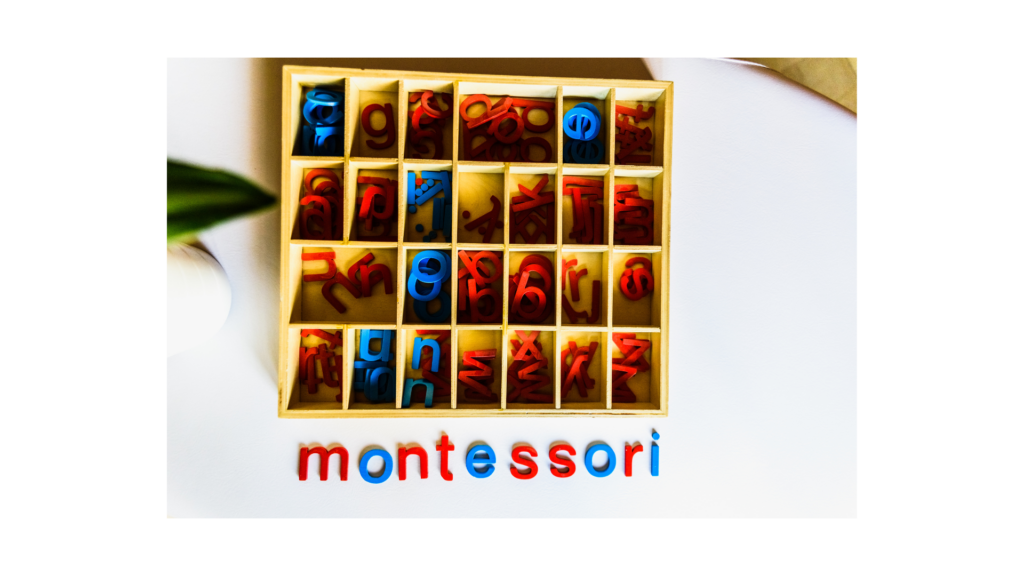
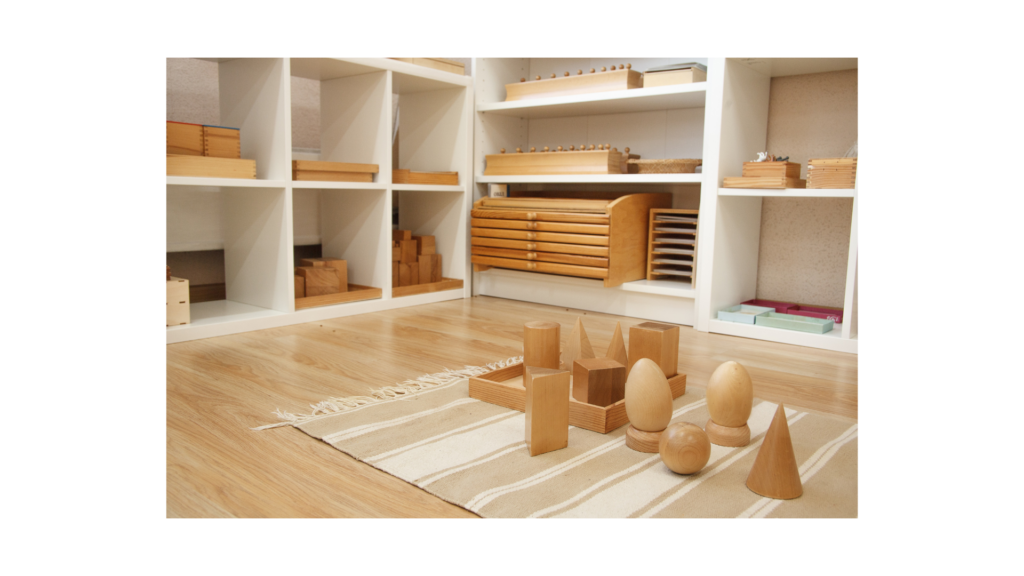
The Montessori Classroom
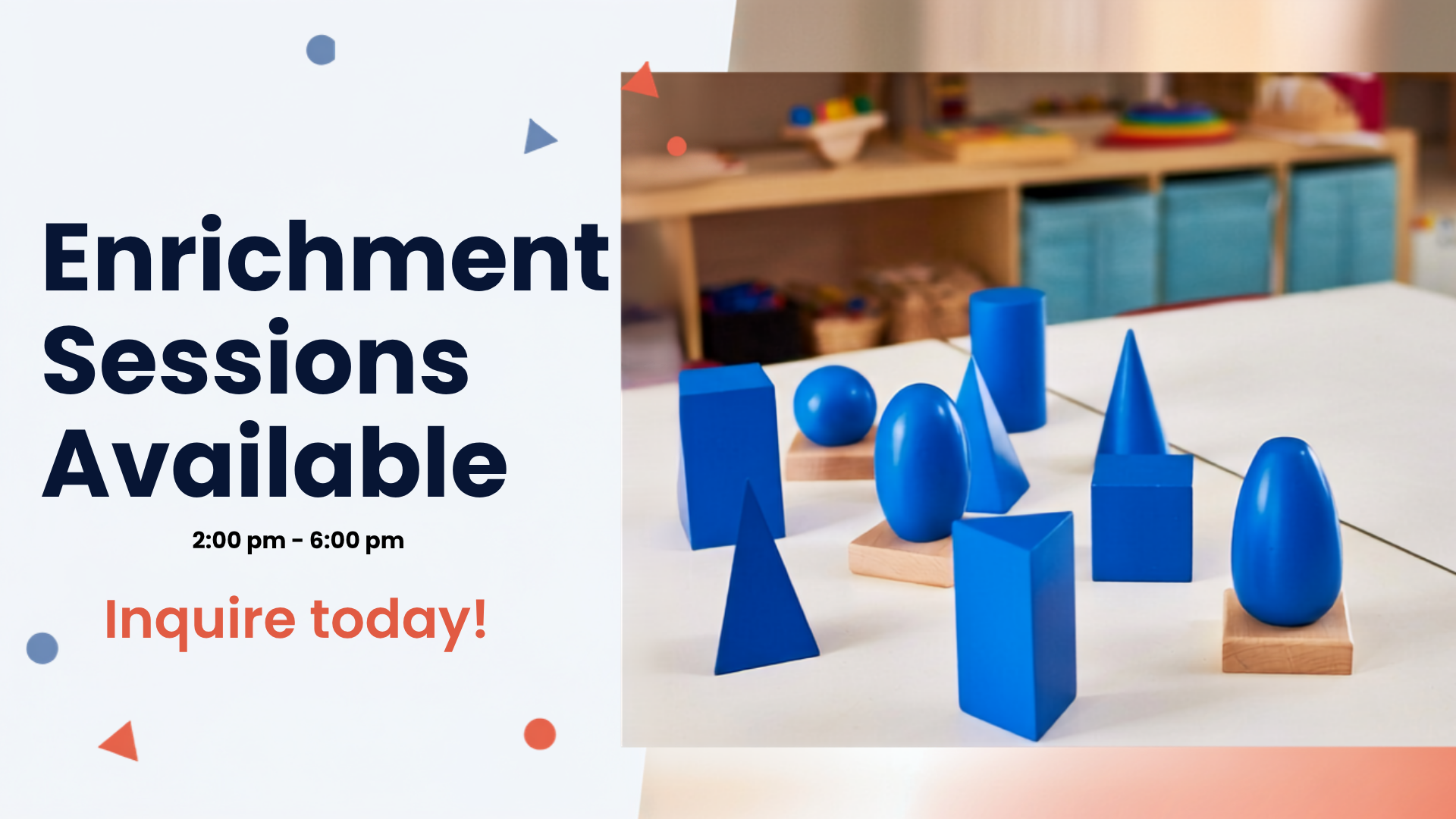
The Montessori classroom layout maximizes student engagement and creates a space that promotes self-discovery and cognitive growth. The layout creates a prepared environment for:
Practical Life Area – practicing daily living skills, such as buttoning, sweeping, and pouring.
Sensorial Area – Engaging the five senses.
Language Area – supporting literacy development with alphabet puzzles to complex reading materials.
Mathematics Area – understanding of numbers and relationships with simple counting beads to complex geometric puzzles.
Cultural Area – broadening children’s understanding of the world and its diverse inhabitants. Areas include geography, history, biology, botany, zoology, and the natural environment.